
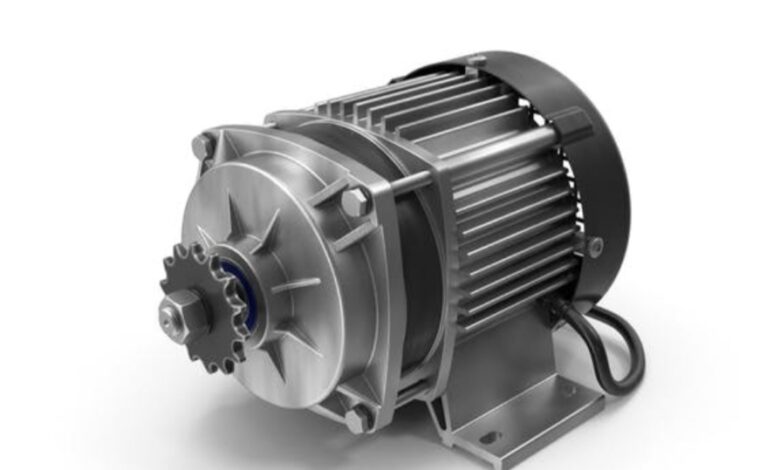
Brushless motors are the most recent improvement in power tools. But what is a brushless motor, and what are the advantages of using one? Let’s take a quick look at the existing technology: brushed motors, to get a better understanding of this new technology.
Permanent magnets (stator) are on the outside of an electric motor, while a spinning armature (rotor) is on the inside.
An electromagnet is built into the rotor. The electromagnet creates a magnetic field inside the rotor that attracts and repels the permanent magnets in the stator as electricity travels through it. However, changing the polarity of the electromagnet, which is achieved by a pair of brushes, is required to make the motor spin 360°.
Motor brushes are actually microscopic blocks of carbon attached to a compression spring, rather than brushes. Brushes are pressed against the rotor’s spinning electrodes. The brushes adjust the magnetic polarity as the electromagnet spins.
Brushed motors are dependable, generally efficient, and low-cost to produce, but they have several drawbacks. Carbon brushes, for starters, ultimately wear out and must be replaced. The brushes are constantly breaking and then making electrical contact as the motor runs, causing sparking and noise.
The motor runs hotter due to the friction created by the brushes rubbing against the spinning rotor. Brushes also limit the motor’s maximum top-end speed. Brushless motors have been added to the line of portable power tools by major tool makers, like Rockwell, for these and other reasons.
There are no brushes in a brushless motor, and the motor is turned inside out, with the permanent magnets moved to the rotor and the electromagnets attached to the stator. The electromagnets are then charged by a computer connected to high-power transistors while the motor rotates, replacing the brushes.
Brushless motors provide several advantages, including no brushes to wear out or replace, quieter and cooler operation, no electrical sparking, and up to 50% longer runtime for cordless tools than comparable brushed motors.
A brushless motor also supplies the correct amount of power required for the job because it is electronically controlled. The motor, for example, can detect whether you’re drilling a 1/8-inch hole in drywall or a 2-inch hole in a steel door and then give the appropriate amount of torque (power). Brushed motors, on the other hand, operate at maximum speed regardless of the task.
Okay, I know what you’re thinking: brushless motors are simply too good to be true; there has to be a catch. There isn’t technically a catch, but brushless motors do have one disadvantage: they are far more expensive to manufacture than regularly brushed motors. The initial investment is frequently recouped due to the tool’s increased efficiency and longer life.


